Engineering
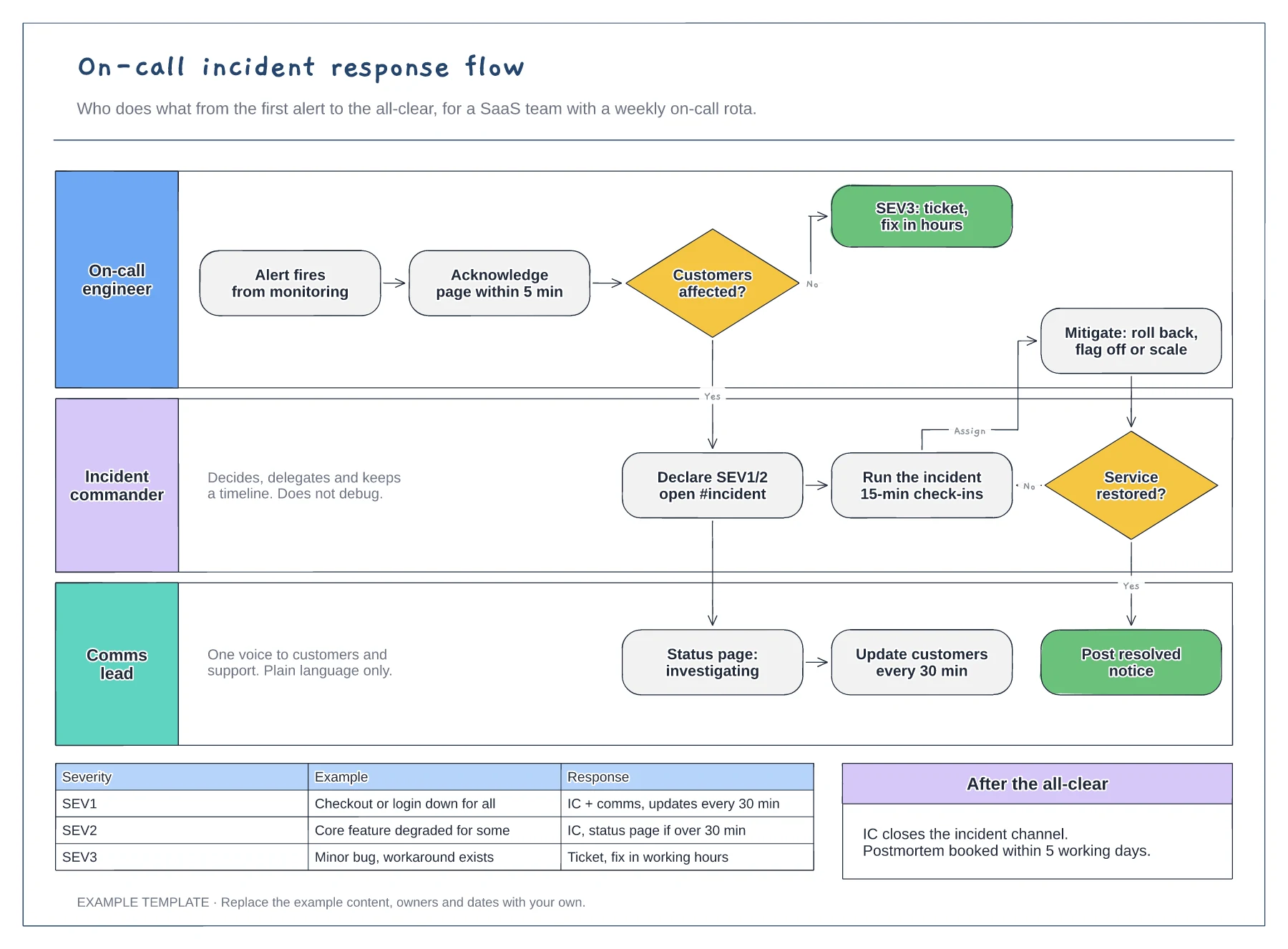
On-call incident response flowchart template
Lanes for on-call, incident commander and comms · Severity decision with SEV1 to SEV3 examples · Mitigation loop and customer update cadence
Preview and use template →An incident response plan tells everyone what to do in the first hours of a cyber attack, when there is no time to work it out. This example follows the NIST lifecycle from detection to recovery, with a triage decision, separate routes for high and lower severity, an escalation table and a list of contacts to fill in before you need them.
No account needed · Opens as your own editable page
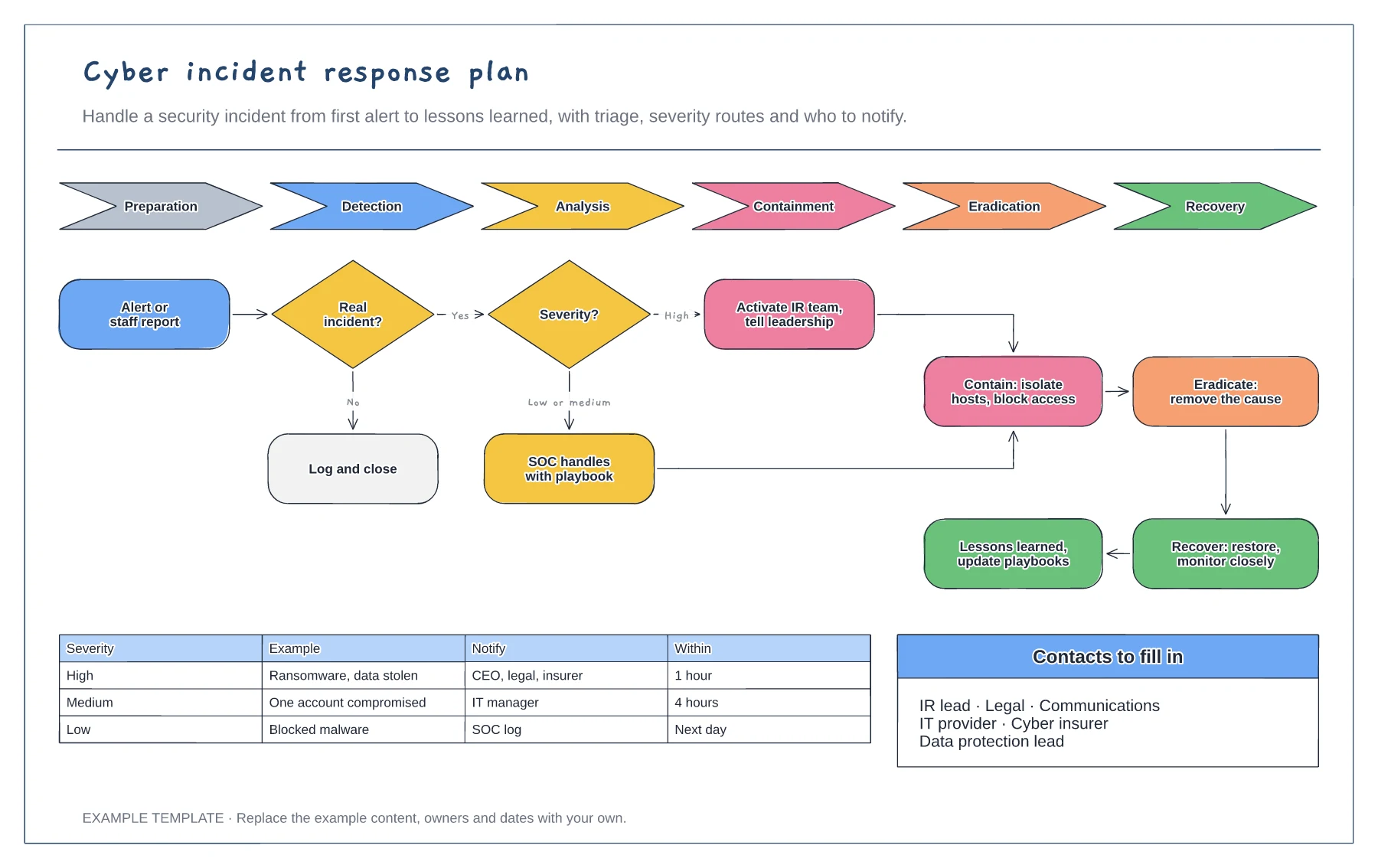
Add names and out-of-hours numbers for the incident lead, legal, communications, your IT provider and your cyber insurer. Many insurers ask to be called first.
Write examples for each severity so the person on call can decide quickly, and set who must be told and how fast.
Run a tabletop exercise with a realistic scenario such as ransomware. Fix the gaps it shows before a real incident does.
Yes. Edit the escalation matrix and contacts with your names, roles and phone numbers, and match the severity routes to your policy.
No. Open the template and edit it in your browser. Your work saves on this device. An account is optional if you want to sync your workspace.
Yes. Use Export in the editor to save a PNG, SVG or PDF, or download an editable .epicdraw backup.
Lanes for on-call, incident commander and comms · Severity decision with SEV1 to SEV3 examples · Mitigation loop and customer update cadence
Preview and use template →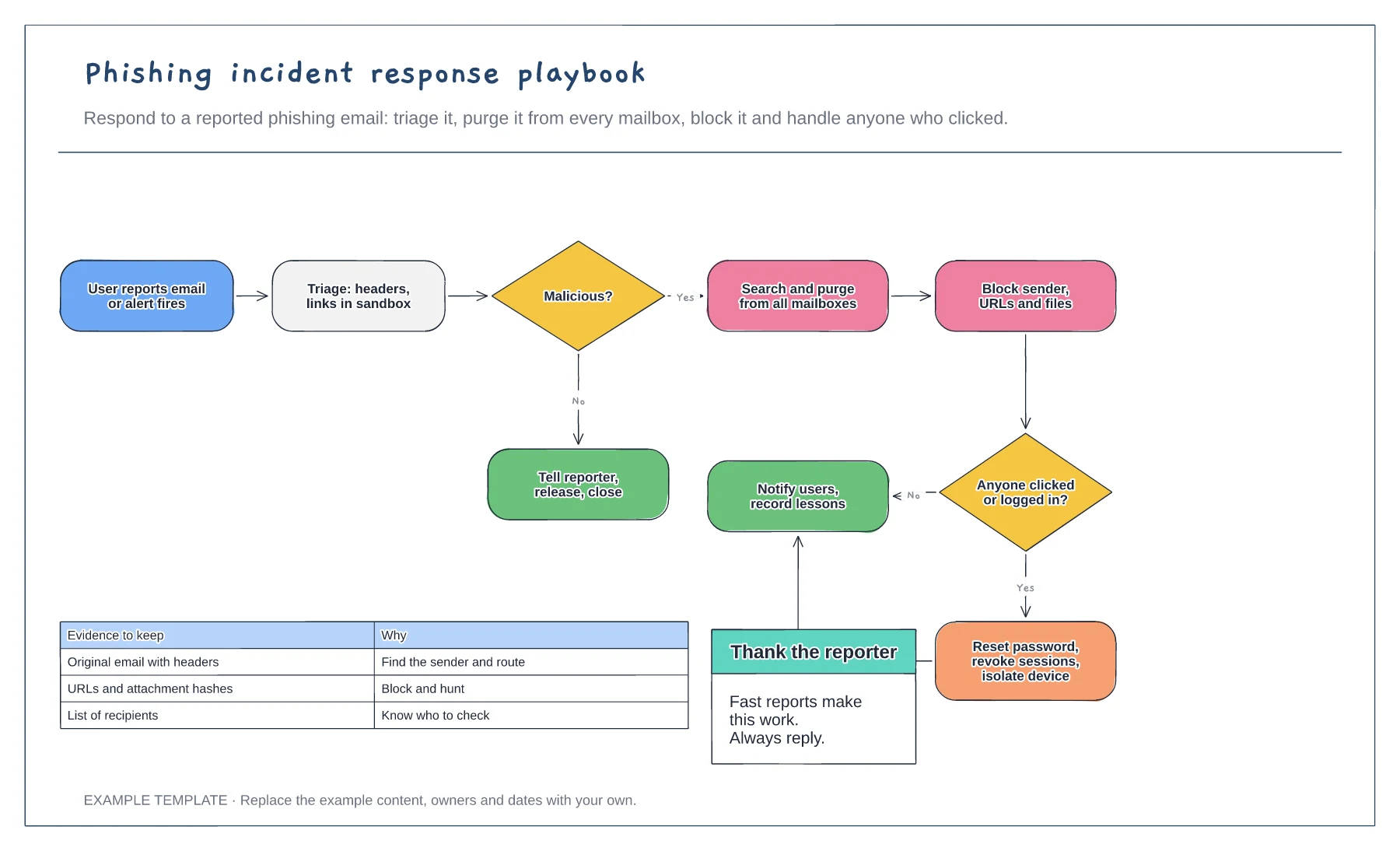
Triage, purge and block steps · Branch for users who clicked or logged in · Evidence to keep
Preview and use template →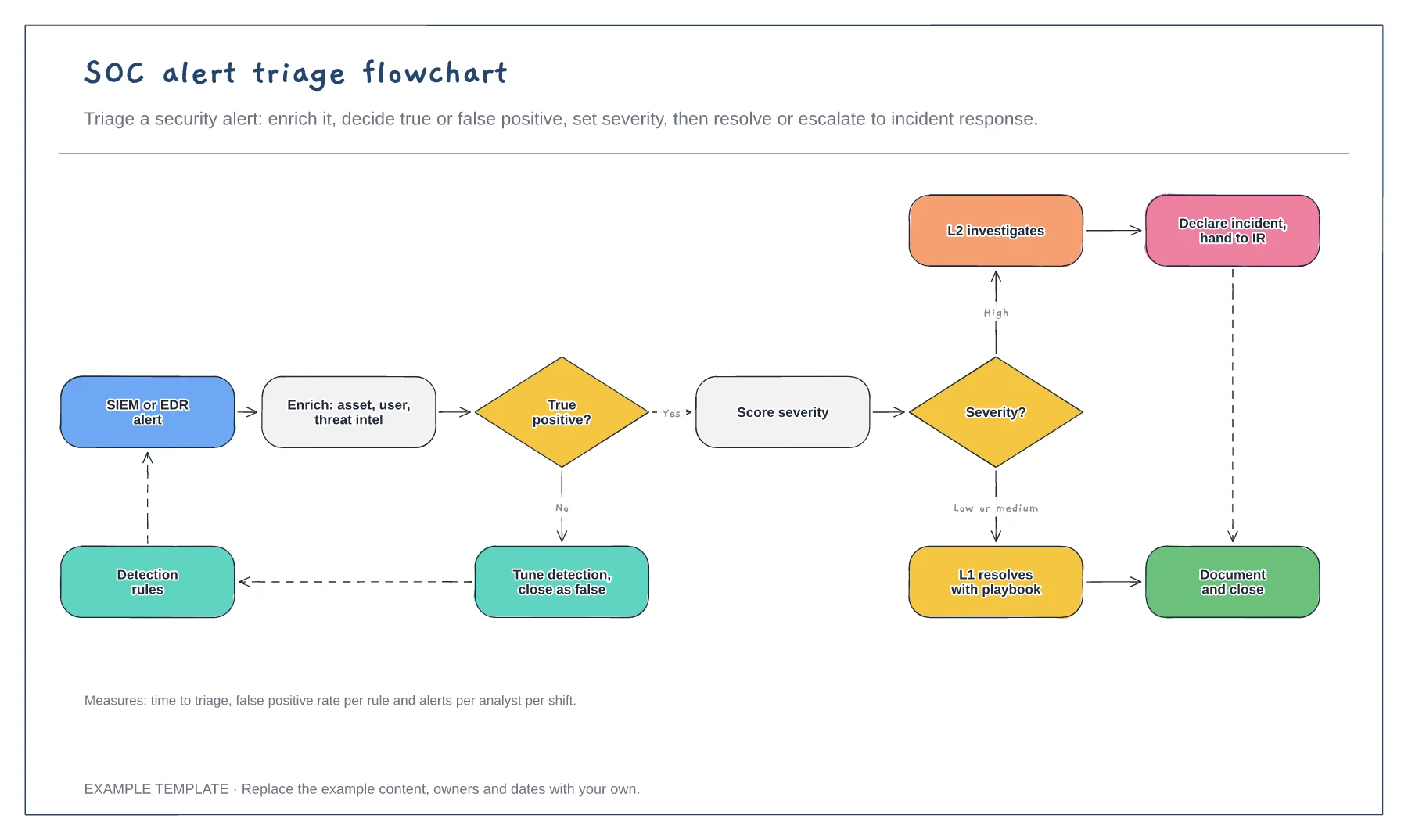
Enrichment and true or false positive decision · Detection tuning feedback loop · Severity routes and escalation
Preview and use template →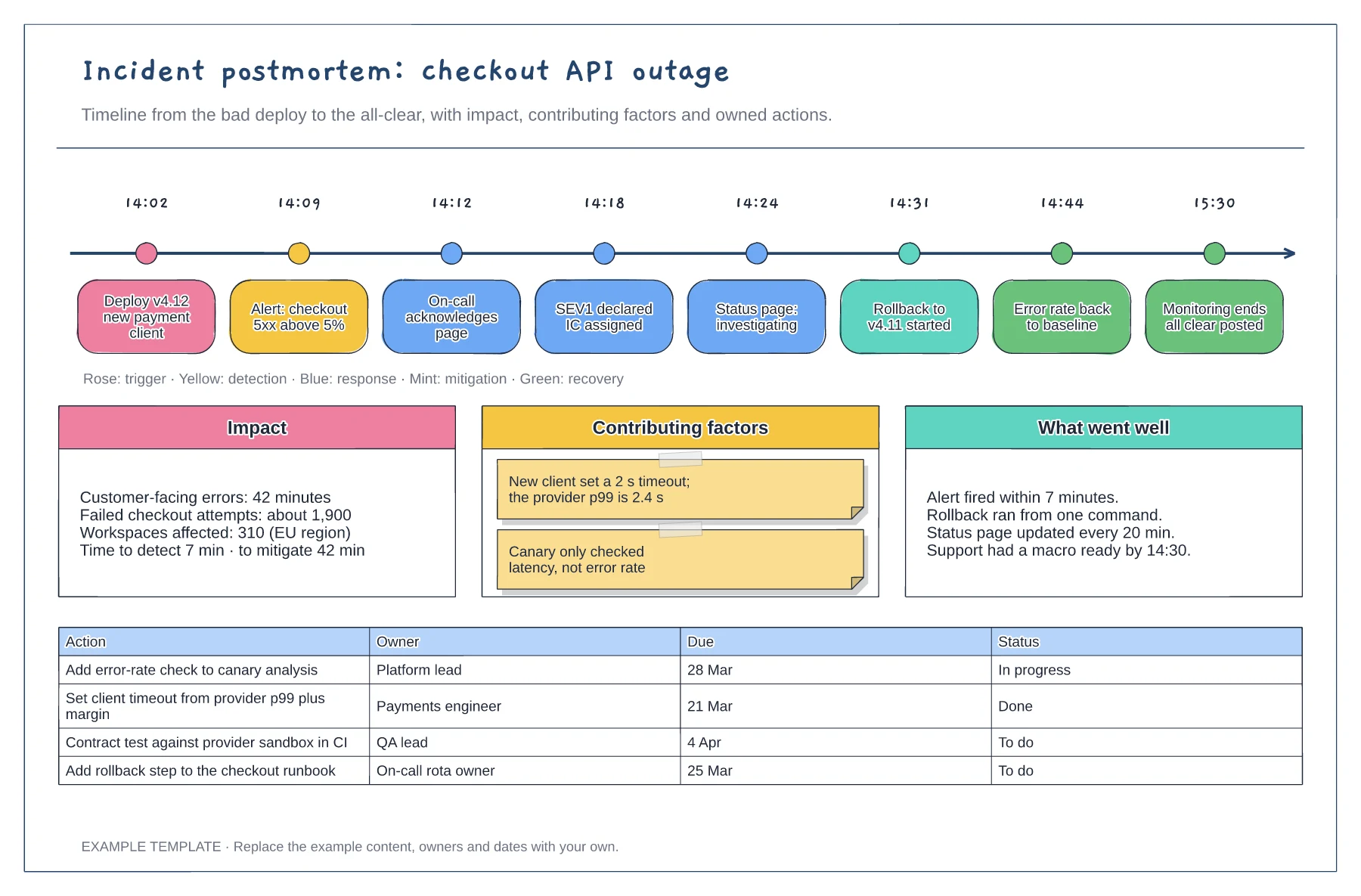
Timestamped events from deploy to all-clear · Impact, contributing factors and what went well · Action table with owners, due dates and status
Preview and use template →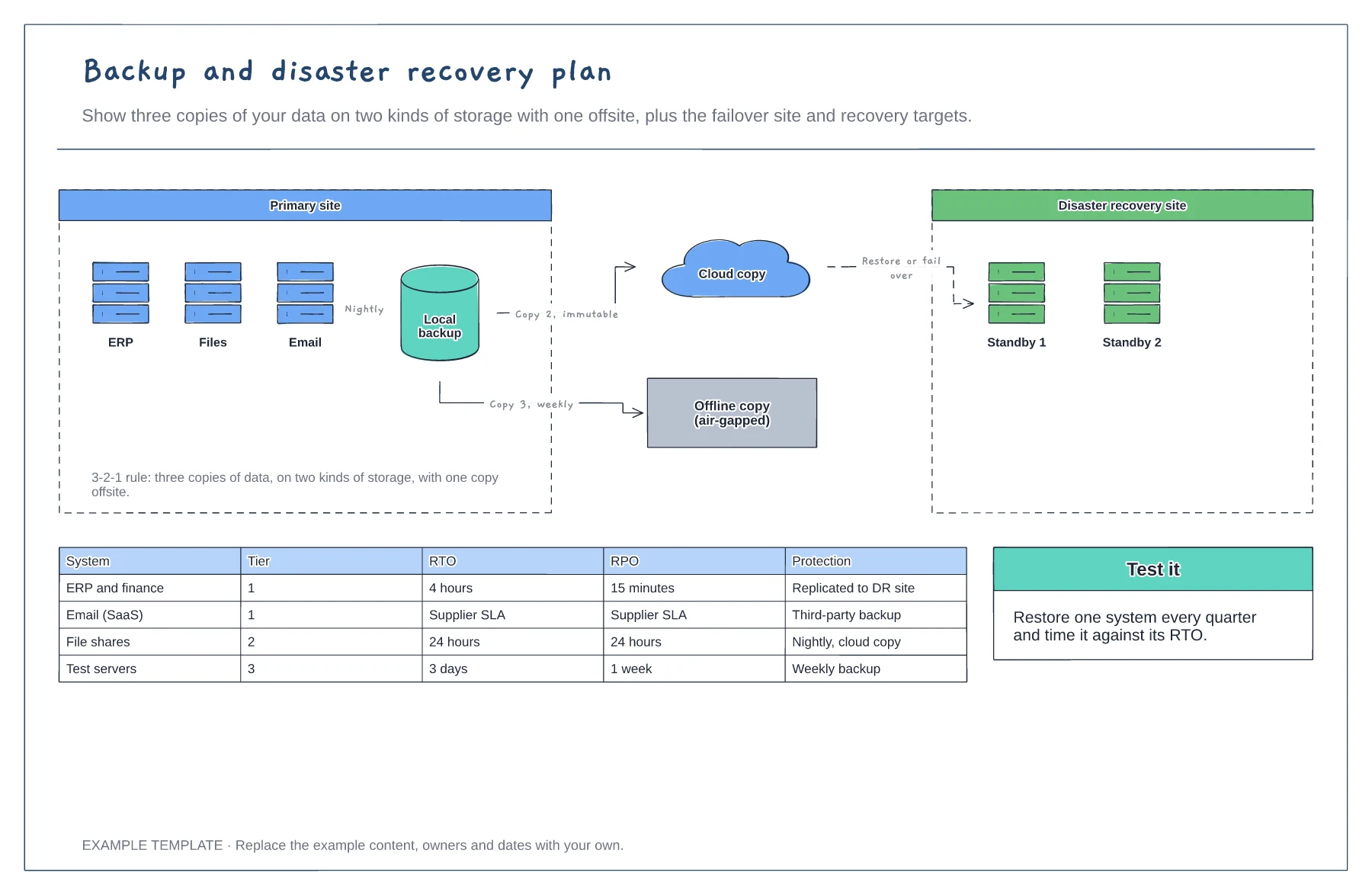
3-2-1 backup copies · Disaster recovery site and failover · RTO and RPO by system tier
Preview and use template →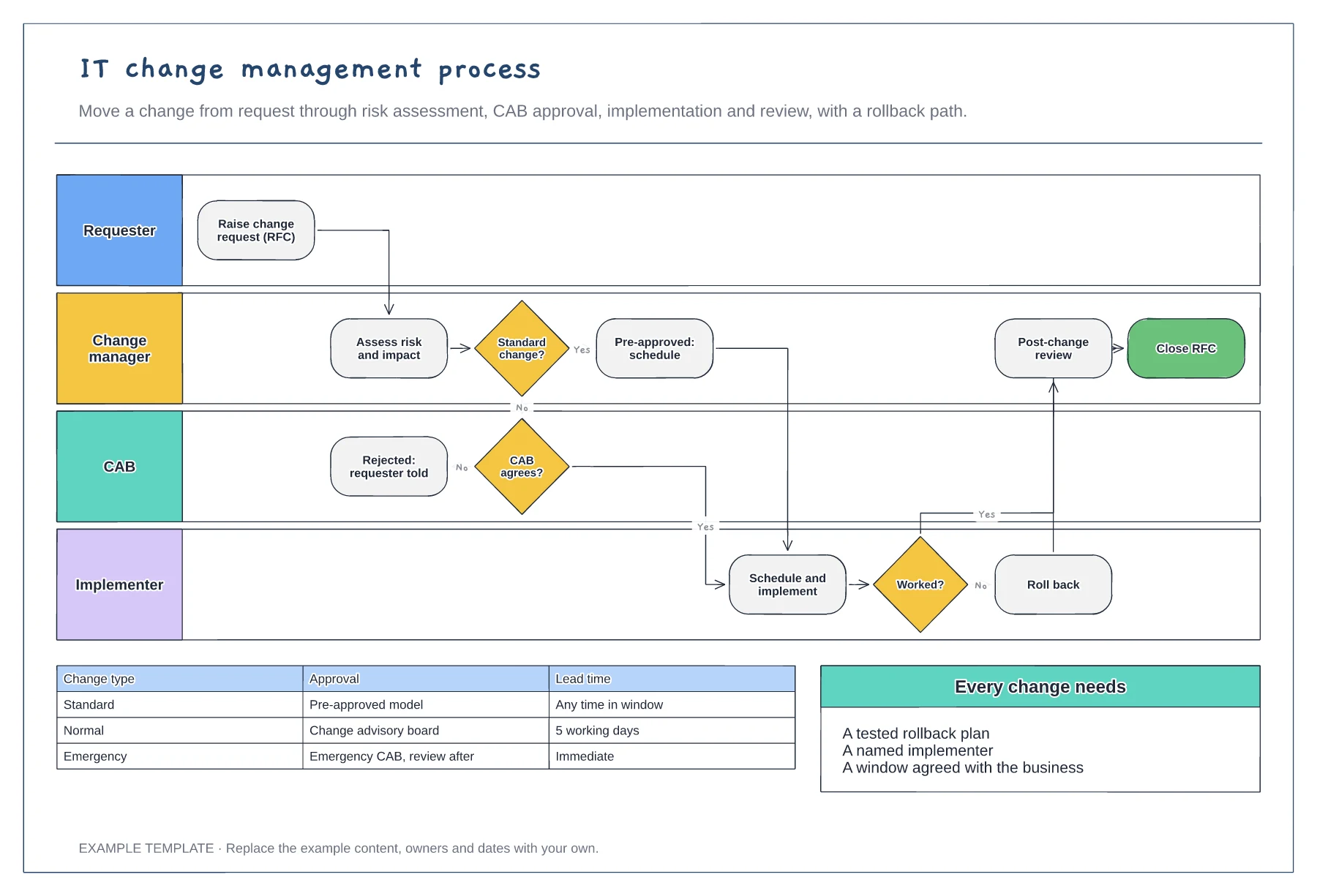
Requester, change manager, CAB and implementer · Standard change fast path and CAB review · Rollback and post-change review
Preview and use template →